

Table of Contents
- Hormone Imbalance: Testing and Diagnosis in Adults
- What is Age-Related Hormone Decline?
- What Are the Signs and Symptoms of Hormone Imbalance?
- Common symptoms in both men and women include:
- How Do Doctors Test for and Diagnose Age-Related Hormone Decline?
- The Most Common Hormone Testing Panels
- Hormone Panels for Men
- Hormone Panels for Women
- What Will My Hormone Blood Tests Reveal?
- How Is Low Testosterone Tested?
- Hormone Tests Other Than for Testosterone or HGH
- Thyroid Hormone Testing
- Recap: Most Common Hormone Testing Panels & What They Reveal
- Medzone Is Your Trusted Source for Quality Hormone Testing
- Frequently Asked Questions About Hormone Testing
Hormone Imbalance: Testing and Diagnosis in Adults
The key to successful hormone therapy is comprehensive hormone testing and analysis.
Hormones influence nearly every major system of the human body including metabolism, energy, strength, sleep, sexual function, immune response, cognitive performance, and emotional wellness. When they are in balance, the body functions smoothly and efficiently. When they are not, life can start to feel “off” in ways that are difficult to explain or fix through diet, exercise, or lifestyle changes alone.
Many men and women who silently struggle with fatigue, weight gain, brain fog, irritability, or low libido don’t realize their symptoms are linked to age-related hormone decline. They may blame stress, aging, insomnia, or simply getting older, when in reality, the true cause is a drop in key reproductive, adrenal, thyroid, and metabolic hormones.
Comprehensive hormone testing is the first step to understanding what is happening inside the body and why someone may not feel like themselves anymore. Unlike basic lab work, which only looks for disease, targeted hormone panels measure the hormones such as testosterone and growth hormone, that directly influence how well you feel, function, and age.
At Medzone, the testing process is painless and straightforward, and the insights gained are invaluable. With the right diagnostic information, our physicians can develop a personalized treatment plan that helps restore energy, confidence, metabolism, and quality of life.
What is Age-Related Hormone Decline?
Hormone levels naturally peak during early adulthood. From the mid-30s onward, the body gradually begins to produce fewer essential hormones. including testosterone, growth hormone, progesterone, estrogen, DHEA, and thyroid-related hormones. This decline affects men and women differently, but it is universal and progressive.
For men, testosterone decreases by about 1–2% per year starting around age 30. Human growth hormone, or HGH output, also gradually falls, reducing metabolism, muscle mass, and tissue repair. Many men are unaware of the decline until symptoms begin to interfere with their daily lives.
For women, estrogen and progesterone begin to fall during perimenopause, often dramatically. This hormonal shift contributes to changes in mood, weight, energy, sleep, and sexual wellness, long before full menopause begins.
Age-related hormone decline is not a disease. It is a biological reality. But modern diagnostic testing allows physicians to detect deficiencies early and design a personalized plan to keep hormones within optimal ranges.
What Are the Signs and Symptoms of Hormone Imbalance?
Hormone imbalance affects everyone differently. Some may notice subtle changes, while others experience a rapid shift in energy, appearance, emotional well-being, or physical comfort.
Common symptoms in both men and women include:
- Chronic fatigue or loss of motivation
- Difficulty losing weight or unexplained weight gain
- Decreased muscle tone and slower physical recovery
- Sleep disturbances and low sleep quality
- Mood swings, irritability, anxiety, or depressed mood
- Brain fog and difficulty concentrating
- Reduced sexual desire or performance changes
- Hot flashes or temperature regulation issues
- Hair thinning, dry skin, and reduced skin elasticity
Many individuals report feeling older than they are, as if their bodies and minds are not keeping up with the life they want to live. When several of these symptoms appear together, hormone testing can help identify the underlying cause.

How Do Doctors Test for and Diagnose Age-Related Hormone Decline?
Hormone testing begins with a blood draw, either in the clinic or at a partnered laboratory. The process only takes a few minutes and does not require fasting unless advised. Samples are then analyzed using advanced diagnostic equipment to measure hormone levels, binding proteins, inflammatory markers, metabolic indicators, and other biomarkers that influence overall health.
Once results are available, you will review them with a hormone-focused medical provider who will:
- Interpret the meaning behind each value
- Identify deficiencies, excesses, or imbalances
- Compare levels to optimal ranges, not just “normal” ranges
- Connect clinical findings to your symptoms and health goals
Unlike traditional medical offices where treatment only begins once disease is present, we approach hormones through a preventative and performance optimization lens. The goal is not to wait until health declines, but rather to support long-term vitality and optimal well.
The Most Common Hormone Testing Panels
Because every patient is unique, the specific testing panels may vary based on symptoms, age, and medical history. However, the most commonly ordered hormone panel provides a broad overview of metabolic, reproductive, adrenal, and thyroid health.
- These panels can help detect:
- Low testosterone or estrogen
- Growth hormone deficiency
- Thyroid dysregulation
- Adrenal fatigue or chronic stress response
- Metabolic slowdown affecting weight and energy
Our unique approach to hormone testing does not diagnose a single issue such as low testosterone, it provides a full picture of hormonal function and how different systems interact.
Hormone Panels for Men
Men’s testing typically focuses on hormones most responsible for energy, physical performance, metabolic function, and sexual wellness. A comprehensive men’s panel may include:
- Free testosterone
- Sex Hormone Binding Globulin (SHBG)
- IGF-1 (growth hormone marker)
- Estradiol (important for bone and cardiovascular health)
- LH and FSH (pituitary signaling hormones)
- DHEA
- Cortisol
- Thyroid hormones (TSH, T3, T4, reverse T3)
- Metabolic markers such as glucose and lipids
- Total testosterone
With accurate testing, low testosterone or HGH deficiency can be treated safely and effectively.
Hormone Panels for Women
Women’s hormone testing is essential not only during menopause but also throughout perimenopause and even pre-40 when symptoms first begin. A women’s panel may include:
- Estradiol and progesterone
- Testosterone (women need it too)
- FSH and LH
- DHEA
- Cortisol
- IGF-1
- Thyroid hormones (TSH, T3, T4, reverse T3)
- Prolactin
- Metabolic markers such as glucose, insulin, and lipids
Hormone symptoms in women are often attributed to stress, aging, or lifestyle, but testing reveals the true internal picture. With this insight, hormone replacement can be precisely tailored to each woman’s needs and goals.
What Will My Hormone Blood Tests Reveal?
A comprehensive hormone panel does more than identify deficiencies. It uncovers patterns that explain how someone feels and functions day-to-day.
Your test results may reveal:
- Why you feel exhausted even after sleeping
- Why weight gain is happening despite healthy habits
- Why your mood or motivation has changed
- Why did libido or sexual function decrease
- Why workouts feel harder and recovery takes longer
- Why do skin and hair look different than before
- Why hot flashes, night sweats, or brain fog are occurring
Hormones do not operate in isolation. A change in one can trigger changes in many others. By mapping these connections, we can restore hormonal balance rather than treating just a single symptom.
How Is Low Testosterone Tested?
Low testosterone is tested with a simple blood test. At Medzone Clinic, we usually start with a total testosterone level. Because testosterone changes during the day, we often recommend testing in the morning. If a result looks low, it is common to repeat the test on a different morning to confirm it, since one “off day” can happen.
In some cases, we may also check related labs to help explain why testosterone is low or why symptoms are happening. This can include a free testosterone level (the portion your body can use) and other hormone markers. The goal is to match your lab numbers with how you feel, not just chase a single number.
Do I Need to Prepare for a Testosterone Blood Test?
Most of the time, preparation is easy. We often suggest a morning draw, since testosterone is usually highest earlier in the day. If you can, try to do these simple things the day before and the morning of your test:
Avoid heavy workouts the evening before. Get a normal night of sleep. Try not to test when you are sick (like with a fever), since illness can temporarily lower hormone levels. Also, tell your provider about any medicines or supplements you take, including testosterone, DHEA, or “hormone boosters,” because they can change results.
If your lab order requires fasting, our team will tell you. Many testosterone tests do not require fasting, but it depends on what other labs are being drawn at the same time.
Should Women Be Tested for Low Testosterone Too?
Yes. Women can be tested for testosterone levels too. While women have much lower testosterone than men, it still plays a role in energy, mood, strength, and sex drive. Testing may be helpful when a woman has symptoms like low desire, low energy, reduced strength, or changes in well-being that do not improve with good sleep, nutrition, and stress support.
Testing can also be useful if symptoms suggest hormone imbalance, or if a patient is already on hormone therapy and wants safe, careful monitoring. The key is interpretation. Women’s testosterone ranges are much lower, and results need to be read with the right reference range and clinical context.
What Are Normal HGH Levels in Adults?
HGH levels are tricky because they rise and fall throughout the day and night. That means a single random HGH blood level may not tell the full story. Many healthy adults can have a low reading at one moment and a higher reading later.
That said, some labs provide typical “snapshot” ranges. One clinical reference lists a common HGH blood test range of about 0.05 to 3 ng/mL for adult males and 0.05 to 8 ng/mL for adult females, but ranges can vary by lab and testing method.
Because HGH moves up and down so much, diagnosis is often based on a fuller work-up, not a single number.
What Are the Normal Testosterone Ranges in Men and Women?
“Normal” testosterone depends on the lab, the test method, age, and whether the result is total or free testosterone. Your lab report will always show the reference range used for your exact test, and that is the range we use for interpretation.
As a practical reference, one medical center lists typical total testosterone ranges per age as follows:
| GROUP | AGE | Total Testosterone Range (ng/dL) |
| Men | 19–49 | 249–836 |
| Men | 50+ | 193–740 |
| Women | 19–49 | 8–48 |
| Women | 50+ | 2–41 |
These numbers are not “one-size-fits-all.” They are starting points. Symptoms and overall health still matter.
What Do My Testosterone Test Results Mean?
Your testosterone results help answer three big questions:
First, is your level clearly low for your lab’s reference range? Second, does it match what you are feeling (like low energy, lower drive, reduced strength, or slower recovery)? Third, is the result consistent, meaning it stays low on repeat testing?
A borderline result does not always mean a true long-term problem. Poor sleep, high stress, excess alcohol, recent illness, certain medications, and even a tough training week can lower testosterone for a short time. That is why a repeat morning test is often recommended when results are low or borderline.
At Medzone Clinic, we read results in context. We look at the full picture—your symptoms, your goals, your health history, and the lab pattern—so you get guidance that makes sense for you.
Understanding HGH Blood Testing and Diagnosis
HGH testing is different from testosterone testing. HGH is released in pulses, so levels can be low at many points during the day even in healthy people. Because of this, diagnosing an HGH problem often involves more than a single blood draw.
Many providers use a step-by-step approach. This may include basic labs, a careful symptom review, and, when appropriate, specialized testing that checks how your body responds under controlled conditions. Clinical guidance commonly relies on stimulation testing to evaluate HGH output, rather than a single random HGH level.
How Should I Prepare for an HGH Test?
Preparation depends on the exact HGH test ordered.
If you are getting a simple HGH blood level, you may be asked to fast, and you may be asked to avoid strenuous exercise before the test. Because HGH can change with sleep and stress, try to get a normal night of rest and avoid a very intense workout the day before.
If you are scheduled for an HGH stimulation test, preparation is more specific. These tests are usually done in a clinic setting with timed blood draws over a few hours. You’ll often need to fast, and you may be asked to pause certain medicines beforehand—only if your prescribing clinician says it is safe. The Medzone team will give you clear instructions based on your exact test, so you know what to do (and what not to do).
What Do My HGH Test Results Indicate?
HGH results are interpreted based on the type of test.
For a single random HGH blood draw, a low number may not mean much by itself because HGH naturally rises and falls. That’s why random HGH is often not used alone to make a diagnosis.
For stimulation testing, the key detail is the “peak” HGH level your body reaches during the test. Some clinical lab guidance notes that, in adults, a peak HGH response above about 4 ng/mL can be considered a normal response in certain stimulation settings, while lower peak responses may suggest reduced HGH production.
Bottom line: HGH interpretation is highly test specific. At Medzone Clinic, we focus on what the test was designed to measure, how reliable it is for your situation, and how the results fit with your symptoms and goals.
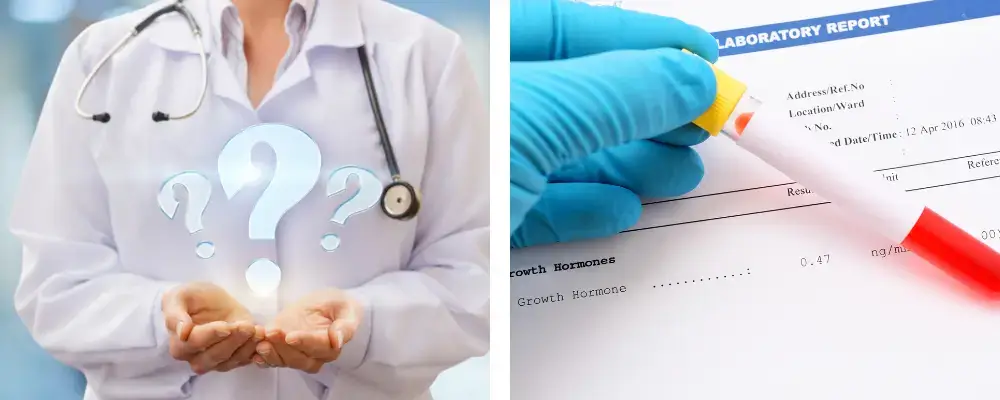
Hormone Tests Other Than for Testosterone or HGH
While hormones such as HGH and sex hormones receive the most attention, other hormonal systems are equally important for health, longevity, and daily function. When needed, our doctors may expand testing to include additional panels.
Adrenal Hormone Panel
The adrenal glands regulate the body’s stress response. When cortisol is too high or too low, individuals may experience:
- Constant fatigue
- Mood changes
- Sleep disturbances
- Sugar and salt cravings
- Difficulty staying focused
Adrenal dysfunction is common in people who feel “burned out,” overstimulated, or chronically tired. Testing provides insight into how the body is coping with daily stress and whether support is needed.
Thyroid Hormone Testing
The thyroid controls metabolism, temperature regulation, digestion, mental clarity, and energy production. Even slight shifts in thyroid hormones can greatly impact weight, stamina, and cognitive performance.
Comprehensive thyroid testing may include:
- TSH
- Free T3
- Free T4
- Reverse T3
- Thyroid antibodies (in some cases)
A thyroid panel is particularly helpful for individuals who struggle with weight fluctuations, chronic fatigue, or persistent brain fog.
Endocrine Panel
This broader diagnostic tool evaluates how the body’s hormonal signaling systems are functioning together. It can help uncover deeper imbalances by measuring:
- Pituitary function
- Pancreatic hormones
- Reproductive hormones
- Adrenal markers
This panel offers valuable insight when several hormonal systems are involved in a patient’s symptoms.
Metabolic Panel
To understand the full impact of hormone changes, we may also assess:
- Glucose and insulin sensitivity
- Lipid profile
- Liver and kidney function
- Inflammatory markers
These values are important for long-term vitality, cardiovascular health, weight management, and longevity.
Recap: Most Common Hormone Testing Panels & What They Reveal
| Hormone Panel | Who It’s For | Key Hormones Measured | Primary Purpose / What It Reveals |
| Male Hormone Panel | Men experiencing low energy, reduced strength, weight gain, or sexual performance changes | Total & Free Testosterone, SHBG, Estradiol, LH, FSH, DHEA, IGF-1, Cortisol, Thyroid Markers | Identifies testosterone deficiency, growth hormone insufficiency, pituitary signaling issues, adrenal fatigue, thyroid imbalance, and causes of low libido & declining metabolism |
| Female Hormone Panel | Women experiencing perimenopause, menopause, irregular cycles, mood changes, or brain fog | Estradiol, Progesterone, Testosterone, FSH, LH, DHEA, IGF-1, Cortisol, Thyroid Markers | Detects estrogen/progesterone decline, hormonal causes of weight gain, decreased libido, sleep issues, mood changes, and menopausal/perimenopausal transition patterns |
| Adrenal Hormone Panel | Individuals with chronic fatigue, stress sensitivity, poor sleep, or burnout symptoms | Cortisol, DHEA, ACTH (if applicable) | Reveals adrenal over-activation or adrenal fatigue that affects stress tolerance, energy, inflammation, weight regulation, and sleep quality |
| Thyroid Panel | Patients with weight fluctuations, cold intolerance, brain fog, hair thinning, or persistent fatigue | TSH, Free T3, Free T4, Reverse T3; Thyroid Antibodies (when indicated) | Evaluates thyroid function and metabolic speed; identifies undiagnosed hypothyroidism, Hashimoto’s, or subclinical thyroid dysfunction impacting weight and energy |
| Endocrine Panel | Patients with multiple hormonal symptoms or complex metabolic changes | Pituitary Markers + Reproductive, Thyroid, Adrenal & Metabolic Hormones | Assesses systemic hormonal signaling; helps identify combined hormone dysregulation rather than a single isolated deficiency |
| Metabolic Panel | Patients with weight-loss resistance, insulin resistance, cardiovascular risk, or chronic fatigue | Glucose, Insulin, Lipid Profile, Liver & Kidney Function | Shows how hormones are impacting metabolism, inflammation, cardiovascular wellness, and long-term health / aging patterns |
Complete details of our exclusive Hormone Panels can be found by accessing this link.
Medzone Is Your Trusted Source for Quality Hormone Testing
Many men and women with age-related hormone loss struggle for years without answers. They may try diets, supplements, new routines, and lifestyle changes, all without success. It is not because they are doing something wrong. It is because they are failing to recognize and do something about the root cause of their issues.
At the Medzone Clinics nationwide, we take a compassionate and patient-centered approach to hormone health. Testing is simple, guidance is clear, and every therapy plan is fully customized. We don’t believe in quick fixes or “one-size-fits-all” medicine. We believe in giving every patient the information, support, and medical expertise they need to feel and function at their very best, not just now, but for years to come.
If you’ve been feeling “not like yourself,” if you are low on energy, gaining weight, struggling with sleep, experiencing mood changes, or losing motivation, it is time you found out why! Comprehensive hormone testing can provide the answer you need and a path back to optimal health.
Medzone specializes in modern, science-driven hormone diagnostics and personalized therapy for men and women across the U.S. You deserve to age with strength, confidence, and clarity. Take the first step today. Contact Us to schedule your comprehensive hormone testing and start feeling like yourself again.
Frequently Asked Questions About Hormone Testing
How long does it take to get results?
Most test results are ready within a few days. Your provider will review them in detail and explain exactly what they mean.
Do I have to fast for hormone testing?
Some tests do require fasting, while others do not. If fasting is necessary, your provider will give you clear instructions.
Will testing show whether I need hormone therapy?
Yes. Results will determine whether your hormones are low, high, or imbalanced and whether hormone replacement could improve symptoms.
Can men and women both benefit from hormone testing?
Absolutely. Hormone decline affects men and women differently, but both benefit from early detection and individualized treatment.
Is hormone testing only for older adults?
No. Many patients in their 30s and 40s seek testing when symptoms begin. Early testing helps prevent long-term decline.
How often should hormone testing be done?
Most patients test annually, while those undergoing hormone therapy may test more frequently to ensure optimal dosing.