

Table of Contents
- Testosterone Replacement Therapy for Weight Loss
- Low Testosterone and Obesity: What’s the Connection?
- TRT for Building Muscle and Body Recomposition
- Will TRT Help You Burn Fat?
- TRT and Stubborn Belly Fat
- Does TRT Improve Metabolism
- Does Weight Loss on TRT Improve Heart Health
- The Different Types of TRT: Is One Any Better Than the Other for Weight Loss?
- Testosterone esters (for injections)
- Delivery methods (and how they affect results)
- How Does TRT for Weight Loss Compare to Other Weight Management Techniques?
- Can TRT be Combined With Other Medical Weight Loss Protocols?
- Is it Safe for Women to Use TRT for Weight Loss
- How do I Find the Best TRT Clinic for Weight Loss Near Me?
- Frequently Asked Questions About Testosterone and Weight Management
Testosterone Replacement Therapy for Weight Loss
Testosterone Replacement Therapy or TRT can be a very effective in weight management and body recomposition for individuals with low testosterone.
If you feel like your body changed “all at once” in your 40s or 50s, you are not imagining it. Many men notice that fat shows up faster, muscle fades easier, and their old routine does not work the way it used to. Clothes fit tighter at the waist. Energy drops. Motivation slips. And the “dad bod” creeps in, even when you are trying.
Usually, low testosterone is a key part of this story.
Testosterone helps your body hold on to lean muscle and manage fat storage. When testosterone is too low, many men feel softer, weaker, and more “puffy” around the middle. They may also feel tired, stressed, and less driven to stay active. Over time, that can turn into weight gain and poor body composition, meaning a higher body fat percentage and less muscle.
This is where testosterone replacement therapy (TRT) can make a real difference for the right patient. TRT is not a “magic weight loss shot.” But when low testosterone is confirmed and treated correctly, patients experience a noticeable shift in how their body responds to healthy habits. That often shows up as better muscle support, less fat gain, and a more athletic shape over time.
In a clinical trial of obese men with low or low-normal testosterone, men who received testosterone during a structured diet program lost more fat mass and more visceral fat (deep belly fat) than men who received placebo. The key point was body composition: the weight loss with testosterone was much more “fat-focused,” while supporting lean mass during the maintenance phase.
At Medzone Clinic, we look at the full picture. If TRT is a match for your lab results, symptoms, and goals, we build a plan designed to help you feel better and reshape your body as well as your health in a steady, safe, results-driven way.
Low Testosterone and Obesity: What’s the Connection?
Low testosterone and weight gain often feed into each other.
When testosterone drops, your body may lose muscle more easily. That matters because muscle is “metabolically active.” In simple terms, muscle helps you burn more calories, even at rest. When muscle goes down, it can become easier to gain fat, especially if your activity level also drops.
At the same time, carrying extra body fat can also push testosterone down. Fat tissue can affect hormone balance in ways that make it harder to maintain healthy testosterone levels. This is one reason why some men feel “stuck.” They try to lose weight, but low energy and low muscle make it harder. They reduce calories, but their body composition does not improve much. They work out, but recovery feels slow and strength does not return the way it used to.
When low testosterone is truly present, TRT may help break that cycle. It supports the hormonal “foundation” that makes training, recovery, and body change feel possible again.
However, it is also important to say this clearly; TRT should be used when it is medically appropriate. Leading medical guidelines emphasize that testosterone therapy is for men with consistent symptoms plus clearly low testosterone on proper testing, confirmed with repeat morning labs.
At Medzone Clinic, we follow a careful medical process so that you are not guessing and you are not treating the wrong problem.
TRT for Building Muscle and Body Recomposition
Many men start TRT because they want to feel like themselves again, meaning they want more energy, better drive, better strength, and better performance in daily life. But body recomposition is often one of the most exciting changes.
Body recomposition means your body becomes “leaner” without needing a dramatic change on the scale. You may lose inches at the waist, gain shape in the shoulders and chest, and notice your arms and legs look more defined. Your weight might stay similar, but your mirror and measurements improve.
Why can this happen with TRT?
Testosterone supports lean muscle mass. Do not misunderstand we are not talking about the way that bodybuilders often abuse testosterone for massive “bulking up.” In appropriate, medically supervised TRT, the point is restoring healthy hormone levels so your body can maintain muscle again.
TRT also tends to improve workout quality for many men. When you feel better, you often move more. You lift more consistently. You recover more smoothly. That consistency is what drives visible body change.
At Medzone Clinic, we coach patients to treat TRT like a performance plan for health: consistent dosing, consistent monitoring, and consistent lifestyle habits that help your results show up faster and last longer.
Will TRT Help You Burn Fat?
TRT can support fat loss in a few practical ways, especially when low testosterone is holding you back.
First, it helps protect and rebuild muscle. More muscle improves your body’s ability to burn calories over time. Second, it may help reduce visceral fat—the deeper fat linked to belly size and “roundness.” In the randomized trial of obese men on a structured diet, testosterone treatment led to a greater reduction in visceral fat area compared with placebo.
Third, TRT can help you feel more “ready” to be active. Many men with low testosterone report low drive, fatigue, and a sense that workouts feel harder than they should. When you feel stronger and more energized, it becomes easier to stay consistent with training and daily movement, two huge drivers of fat loss.
TRT and Stubborn Belly Fat
If there is one area men complain about most, it is the belly.
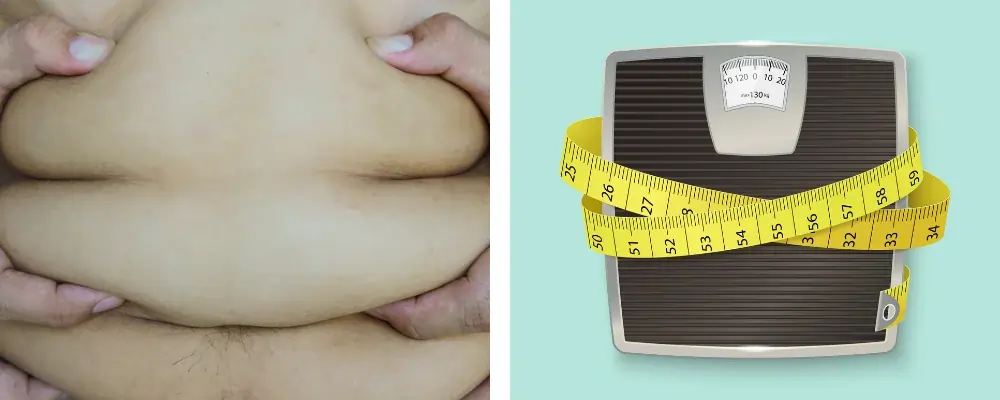
Men with low testosterone often gain fat around the waist. This is not just “surface fat.” A big part can be visceral fat, the deeper fat that pushes the belly outward and makes the waistline expand.
Research has shown testosterone therapy can help reduce or prevent increases in visceral fat in aging men with low or low-normal levels, while supporting lean mass. And in the obesity-plus-diet trial, men receiving testosterone lost significantly more visceral fat area than men on placebo during the program.
In real life, what does that often look like?
Many men notice their waist measurement improves first. Pants fit better. The belly feels less “hard and round.” Their torso looks tighter, even before the scale drops much. That is a classic body recomposition pattern.
Does TRT Improve Metabolism
Metabolism is a broad word, but most people mean this: “Will my body burn energy better again?”
TRT can support a healthier metabolic profile in men with low testosterone mainly by improving body composition. When lean mass goes up and visceral fat goes down, your body often handles fuel better. This is one reason testosterone and metabolic health are closely linked. Also, when men lose fat and improve fitness, testosterone levels can improve too. That creates a strong “upward spiral” where better body composition supports better hormone balance, and better hormone balance supports better training and body composition.
The biggest takeaway is simple; TRT is not a replacement for healthy habits. It is a tool that helps your body respond to those habits again when low testosterone is part of the barrier.
Does Weight Loss on TRT Improve Heart Health
When men reduce belly fat, improve lean mass, and become more active, heart health often improves as a natural result. Lower waist size, better fitness, and healthier body composition usually go hand-in-hand with better cardiometabolic markers over time.
Safety and heart risk are also common concerns, so it is important to address them in a clear way. A large cardiovascular outcomes trial studied middle-aged and older men with low testosterone and increased cardiovascular risk and found TRT does not significantly increase CV risk as once thought.
At Medzone Clinic, we treat heart health as part of the TRT plan. We do not “set it and forget it.” We track what matters and adjust as needed, so you can pursue body goals while staying supported medically.
The Different Types of TRT: Is One Any Better Than the Other for Weight Loss?
There are two main ways to think about TRT “types”:
- the testosterone molecule and how it is released (often discussed as “esters” for injections), and
- the delivery method (injection, topical, patch, oral capsule, pellet).
Testosterone esters (for injections)
Common injectable options include testosterone cypionate and testosterone enanthate (typically shorter-acting), and testosterone undecanoate (longer-acting). The ester impacts how long the testosterone releases and how often dosing is needed. A detailed review of TRT preparations describes how different formulations create different peaks and troughs and different dosing schedules.
From a fat loss standpoint, what matters most is not the ester itself. What matters most is keeping testosterone levels in a healthy, stable range for you, with a plan you can follow consistently, plus the right nutrition and training.
In other words, a “perfect” ester does not help if your levels swing wildly or your plan is not sustainable.
Delivery methods (and how they affect results)
Injections (IM or subcutaneous): Many men like injections because dosing is predictable and easy to adjust. Subcutaneous injections have growing evidence showing comparable testosterone levels and practicality for many patients, often with less discomfort.
Topical gels/creams: These can offer steady daily dosing. Consistency matters here, and careful application is important.
Patches: These provide continuous absorption over 24 hours, and pharmacology reviews describe their delivery pattern and how levels change when removed.
Oral testosterone undecanoate: Oral options exist and can be effective, though they come with their own monitoring needs and label considerations, including attention to blood pressure in prescribing information.
Pellets: Pellets are implanted and release testosterone over time. Some men like the convenience, but dosing flexibility is lower because you cannot “fine-tune” as quickly.
So, is one “better” for weight loss?
No delivery method is automatically “better” for weight loss on its own.
The best approach is the one that helps you maintain healthy levels with the least friction in your life. That usually means a plan you can stick to, with stable levels, good symptom control, and consistent follow-up.
At Medzone Clinic, we match the method to the person. Your schedule, your comfort with needles, your goals, and your lab response all matter. That is how you get better body results tailored to your specific needs.
How Does TRT for Weight Loss Compare to Other Weight Management Techniques?
Think of weight management like a toolbox.
Nutrition, training, sleep, stress control, and medical support all belong in that toolbox. TRT is not the whole toolbox. But for men with confirmed low testosterone, TRT can be a powerful tool that helps the other tools work better.
Here is how TRT compares in plain terms:
Diet alone: Diet can absolutely reduce weight, but many men lose both fat and muscle when they diet aggressively. The goal is to lose fat while protecting muscle. In the obesity trial, dieting men on placebo lost fat and lean mass, while the testosterone group’s weight loss was far more “fat-focused,” with better lean-mass recovery during maintenance.
Exercise alone: Exercise is essential, but low testosterone can make it harder to build and keep muscle. TRT can make resistance training feel more rewarding because your body is better supported hormonally.
Standard weight loss programs: Many programs focus only on the scale. TRT-focused care often tracks waist size, strength, energy, and body composition, which is where “real” transformation shows up.
If your testosterone is normal, TRT is not the right tool. But if it is low and you have symptoms, TRT can help your body shift from “fighting you” to “working with you.”

Can TRT be Combined With Other Medical Weight Loss Protocols?
For many men, yes, TRT can be combined with other medically guided weight loss approaches, and that combination can be very effective.
This is especially true when a man has multiple barriers at once, such as low testosterone, insulin resistance, high stress, poor sleep, and a long history of weight cycling. In those cases, layering the right tools can create faster momentum.
One timely example is the rise of GLP-1–based medical weight loss programs. Weight loss itself can improve testosterone levels in many men, and newer research has also explored how GLP-1 obesity medicines may be linked with improved testosterone levels as men lose weight.
The smart approach is coordination. If you are using TRT alongside another protocol, your provider should monitor your response, adjust dosing as needed, and make sure the full plan supports your long-term health.
At Medzone Clinic, we build plans that fit your goals. If combining therapies makes sense, we do it with structure and medical oversight, so your results feel steady and sustainable.
Is it Safe for Women to Use TRT for Weight Loss
This is an important question, and the answer needs to be clear.
Testosterone plays a role in women’s health too. But TRT for women is not the same as TRT for men. Women require much smaller doses, and the goals are often different.
Major medical consensus guidance on testosterone therapy for women emphasizes that testosterone may be appropriate in select cases, with careful dosing and monitoring, and that therapy should be targeted and medically supervised.
When it comes to “TRT for weight loss” specifically, women should be cautious about anyone selling testosterone as a simple fat loss shortcut. The right use is individualized and based on symptoms, labs, and a careful plan.
At Medzone Clinic, if a woman is considering testosterone support, we focus on safety, appropriate dosing, and clear goals. If your primary goal is weight loss, the best plan for women is often broader than testosterone alone. Hormone balance, menopause support, thyroid function, nutrition, movement, and sometimes medical weight loss options all matter. A good clinic looks at the whole picture.
How do I Find the Best TRT Clinic for Weight Loss Near Me?
TRT can be life-changing when it is done correctly. It can also be frustrating when it is done casually, without real testing, real follow-up, or a plan that fits your body.
If your goal is weight loss and improved body composition, look for a TRT clinic that does these things well:
A strong clinic confirms low testosterone properly. That means symptom review, morning labs, repeat testing when needed, and a medical decision that fits established clinical guidance.
A strong clinic cares about body composition, not just testosterone numbers. They track waist size, strength, energy, and how you feel in daily life. They help you build the habits that make TRT work.
A strong clinic offers multiple delivery options. The “best” TRT plan is one you can follow consistently, whether that is injections, topical therapy, or another method—while keeping your levels stable and your monitoring reliable.
A strong clinic monitors you. TRT is not a one-time decision. It is a relationship with your health. Proper monitoring supports better results and helps your plan stay optimized over time.
At the Medzone Clinic locations nationwide, our TRT care is built around outcomes that matter: real energy, real strength, and a body you feel good living in. If you are tired of guessing and you want a medically guided plan that targets low T problems at the source, we are here to help.
If you suspect low testosterone is holding back your fat loss and muscle goals, Contact Us and schedule a TRT consultation with a Medzone Clinic today!
Frequently Asked Questions About Testosterone and Weight Management
Can TRT cause weight loss by itself?
TRT is not a stand-alone weight loss plan. But if low testosterone is part of why you gained fat and lost muscle, TRT can make it easier for your body to respond to healthier habits. Many men notice better energy, better workout drive, and better recovery, which helps them stay consistent. Over time, that consistency often leads to a leaner look, a smaller waist, and better body composition.
Will TRT help me lose belly fat and the “dad bod” look?
For many men with low testosterone, belly fat is the most stubborn area. TRT can support a healthier waistline because it helps your body hold onto lean muscle and may reduce deep belly fat when combined with smart eating and strength training. Many men notice their pants fit better first, even before the scale changes much. That is a classic sign of improved body composition.
What’s the difference between losing weight and improving body composition?
Weight is just a number. Body composition is how much of your body is muscle versus fat. A man can lose “weight” but also lose muscle, which can make him look softer over time. With TRT, the goal is usually body recomposition, meaning less fat and more lean mass. You may see changes in your waist, strength, and shape even if your weight does not drop fast.
How long does it take to see body changes on TRT?
Most men notice early changes in energy, motivation, and recovery first. Visible body changes take more time because muscle and fat shifts happen steadily. Many men start noticing better waist fit, better gym performance, and a firmer look within the first few months, especially when they train consistently and eat with a plan. Bigger changes often build over 6 to 12 months and continue as habits stay strong.
Do I need to work out while on TRT to lose fat?
You do not have to be a hardcore athlete, but movement matters. TRT works best when your lifestyle supports your goals. Strength training is especially helpful because it protects and builds lean muscle, which is a big driver of a healthier metabolism and a tighter physique. Even simple steps like walking daily and lifting weights a few times per week can make a big difference.
Should I eat differently if I start TRT for weight management?
Most men do best with a simple approach: steady protein intake, fewer processed foods, and a plan you can follow. Extreme dieting often backfires because it can reduce muscle and increase cravings. A balanced calorie deficit, paired with resistance training, tends to support fat loss while keeping your body strong. TRT can make it easier to follow this plan by improving energy and training consistency.
Is there a “best” type of TRT for weight loss?
No single TRT method is automatically “best” for weight loss. What matters most is keeping your levels stable, matching therapy to your lifestyle, and following through with consistent monitoring. Injections, topicals, and other options can all work well when the plan is designed correctly. The best choice is often the one you will stick with comfortably and consistently.
Can TRT be combined with medical weight loss programs?
Yes, in many cases it can. Some men do very well combining TRT with a structured medical weight loss plan, especially if they have multiple barriers like stubborn belly fat, low energy, and long-term weight cycling. The key is coordination and proper monitoring, so the full plan supports your body, your goals, and your long-term health.
Will TRT help with cravings and appetite?
TRT is not an appetite suppressant. But when men feel less tired, less “drained,” and more motivated, they often make better food choices without feeling like they are fighting themselves every day. Better sleep and better mood can also reduce stress eating. Many men describe it as feeling more in control, which supports better consistency with a nutrition plan.
What if my testosterone is “normal,” but I still can’t lose weight?
If your testosterone is normal, TRT usually is not the right answer. In that case, we look at other drivers like sleep, stress, nutrition habits, training strategy, thyroid support, insulin balance, and menopause-related hormone changes in women. Many people are missing one or two key pieces that make the plan finally work. The right clinic helps you find those pieces instead of guessing.