

Table of Contents
- Hormones and Sleep: What’s the Connection?
- Which Hormones Are Tied Most Closely to Sleep?
- Testosterone and Sleep: What Is the Connection?
- HGH and Sleep: What Is the Connection?
- Sleep Disorders and Low Testosterone
- Sleep Disorders and Age-Related HGH Deficiency
- The Dangers of Poor Sleep and Daytime Tiredness
- Can Hormone Therapy Improve Sleep?
- How Can TRT Improve Sleep?
- Can HGH Therapy Improve Sleep?
- Sleep, Menopause, and HRT for Women
- Other Ways to Get More Restful Sleep
- What Makes Us Different
- Tired of Being Tired? Book a Consult With the Sleep Experts at Medzone
- Frequently Asked Questions about Hormones, Hormone Therapies, and Sleep
How Hormones Affect Sleep and How Does Sleep Affect Hormones
The relationship between hormones and sleep is complex one, with hormone levels impacting sleep and sleep affecting hormone levels.
If you have been waking up tired, tossing and turning at night, or feeling worn down all day, hormones may be part of the reason. Sleep and hormones are tied together in a two-way cycle. Some hormones help you fall asleep, stay asleep, and wake up feeling restored. Other hormones, including testosterone and growth hormone, are made in greater amounts during good sleep. When sleep breaks down, those hormone patterns can break down too. Over time, this can turn into a frustrating cycle of low energy, poor rest, weight gain, mood changes, and declining wellness.
Let’s take a closer look at how hormones affect sleep, how sleep affects hormones, and why getting both back into balance can make such a difference.
Hormones and Sleep: What’s the Connection?
Sleep is not just “time off” for the body. It is one of the most active repair times in your day. While you sleep, your body follows a steady rhythm. Brain signals change. Stress hormones drop and rise at the right times. Tissue repair begins. Important hormones are released. Your body uses this time to reset.
That is why sleep problems often reach far beyond feeling tired the next day. When sleep is poor, the body can start missing chances to regulate many key systems. Appetite may rise. Stress may go up. Blood sugar may become harder to control. Sex drive may fall. Recovery from exercise may slow down. Mood can suffer. Over time, hormone balance may shift in ways that make sleep even worse.
The relationship works both ways. Low hormone levels, such as low testosterone or HGH deficiency, can interfere with sleep quality. At the same time, broken sleep can reduce the body’s healthy production of hormones. In many people, this creates a loop that is hard to break without real answers.
For example, a person with low testosterone may have more body fat, less muscle, lower mood, and more nighttime waking. A person with age-related low growth hormone may feel less restored after sleep, gain weight more easily, and struggle with recovery. A woman in menopause may have hot flashes and night sweats that interrupt sleep over and over again. Then, because sleep keeps getting disrupted, the body becomes even less able to support strong hormone balance.
This is why sleep problems should never be brushed off as “just getting older.” They can be one of the clearest signs that the body is out of rhythm.
Which Hormones Are Tied Most Closely to Sleep?
Many hormones affect sleep, but some play a bigger role than others. A few help control your sleep-wake cycle directly. Others shape how deeply you sleep, how well you recover, and how rested you feel the next day.
Testosterone: Testosterone helps support energy, muscle mass, mood, motivation, and sexual health. It is also closely tied to sleep quality. Healthy sleep helps the body make testosterone, and low testosterone can be linked with poor sleep, low energy, and nighttime restlessness.
Human Growth Hormone (HGH): Growth hormone is strongly linked to deep sleep. It helps with recovery, tissue repair, muscle support, metabolism, and healthy body composition. When deep sleep suffers, growth hormone release can suffer too. When growth hormone is low, sleep may feel less restorative.
Melatonin: Melatonin is one of the body’s main “time” hormones. It helps tell the body when it is time to wind down and sleep. Light exposure, screen use, travel, aging, and stress can all disrupt normal melatonin rhythm.
Cortisol: Cortisol is often called the stress hormone. It should be higher in the morning and lower at night. When cortisol stays too high late in the day, you may feel tired but wired. That can make it hard to fall asleep or stay asleep.
Estrogen: In women, estrogen affects many systems tied to sleep, including mood, temperature control, and brain signaling. When estrogen drops during perimenopause or menopause, sleep often becomes lighter and more broken.
Progesterone: Progesterone can have a calming effect in many women. When it declines, sleep may become less steady. Some women notice more anxiety, more nighttime waking, and less restful sleep when progesterone falls.
Insulin: Poor sleep and hormone imbalance can both affect how the body handles blood sugar. Blood sugar swings may lead to nighttime waking, cravings, weight gain, and daytime fatigue.
Leptin and Ghrelin: These so-called “hunger hormones” are also tied to sleep. Poor sleep can increase hunger and cravings while making it harder to feel full. This can drive weight gain, which may then worsen sleep problems and hormone imbalance.
Each of these hormones matters, but testosterone and growth hormone deserve special attention because they are deeply tied to restorative sleep, healthy aging, body composition, and energy.
Testosterone and Sleep: What Is the Connection?
Testosterone and sleep are closely linked. In many people, healthy sleep supports healthy testosterone levels. That means sleep is not just important for feeling rested. It is also important for hormonal strength.
The body tends to produce testosterone in patterns that depend on sleep quality and sleep length. Deep, steady sleep helps support normal hormone signaling. When sleep becomes short, broken, or poor in quality, testosterone levels may fall. This can happen with frequent waking, chronic stress, insomnia, or untreated sleep disorders.
At the same time, low testosterone may also make sleep worse. Many men with low testosterone report fatigue during the day but poor sleep at night. They may feel sleepy yet still wake up often. They may also notice low drive, less motivation, lower mood, reduced exercise recovery, more body fat, and less physical resilience. These problems can all feed into poor sleep.
Low testosterone can also affect body composition. As muscle mass drops and fat mass rises, the risk of sleep-related breathing problems such as obstructive sleep apnea (OSA) may grow. This is one reason the connection between testosterone and sleep is so important. It is not only about one symptom. It is about the whole picture.
People sometimes assume that tiredness alone means they need more sleep. Sometimes that is true. But when tiredness comes with weight gain, low libido, lower strength, poor recovery, and trouble sleeping, the issue may be deeper. Hormone imbalance may be helping drive the problem.
HGH and Sleep: What Is the Connection?
Growth hormone and sleep are also deeply connected. In fact, some of the body’s most important growth hormone release happens during deep sleep. That makes sleep one of the key times when the body repairs and restores itself.
Growth hormone supports muscle maintenance, fat metabolism, tissue repair, exercise recovery, and healthy aging. It is part of what helps you feel rebuilt after a good night’s rest. When deep sleep is shortened or broken, growth hormone release may drop. Over time, that may lead to slower recovery, less vitality, more body fat, and a greater sense that sleep “isn’t doing its job.”
Age matters too. Natural growth hormone levels tend to decline over time. That drop may be one reason some adults notice that recovery, body composition, and sleep quality all seem to change with age. They may sleep for seven or eight hours, yet still wake up feeling flat, stiff, or tired. They may lose muscle more easily and gain fat more easily. Their body may not bounce back the way it once did.
Low growth hormone can also affect energy and daytime function. If a person feels weak, foggy, low on stamina, and never fully restored, sleep may be part of the story. But the hormone side of the story matters too.
This is another reason sleep and hormones can become a vicious cycle. Poor sleep reduces growth hormone support. Lower growth hormone may leave the body less able to recover and regulate itself well. That can make future sleep feel even less refreshing.
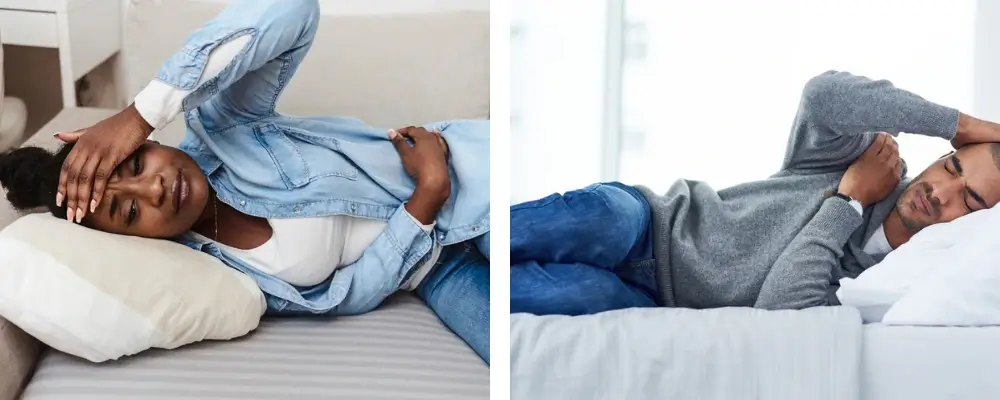
Sleep Disorders and Low Testosterone
Low testosterone and sleep disorders often overlap. One problem may worsen the other, and many men get stuck in the middle without realizing it.
A man with low testosterone may notice common symptoms such as low sex drive, reduced stamina, irritability, low motivation, increased belly fat, and trouble sleeping. He may fall asleep without much trouble but wake often during the night. Or he may feel exhausted all day and still struggle to get deep rest at night.
Part of the problem is that low testosterone often affects body composition and overall wellness. When testosterone drops, muscle mass may decline while body fat rises. Extra weight, especially around the midsection and neck, can increase the chance of OSA.
Obstructive sleep apnea happens when the airway narrows or closes during sleep. Breathing stops and starts over and over again. The person may snore, gasp, toss and turn, or wake up with dry mouth, headaches, or brain fog. Some people do not even realize it is happening. They only know that they wake up tired no matter how long they stay in bed.
Sleep apnea is strongly linked with obesity, and obesity is also linked with lower testosterone. This means many men face a three-part problem at once: weight gain, poor sleep, and falling testosterone. Each problem can make the others worse. More weight may worsen sleep apnea. Worse sleep may lower testosterone. Lower testosterone may make it harder to maintain muscle, control body fat, and feel motivated enough to stay active.
This is why daytime tiredness should not be ignored. If a man feels sleepy during the day, snores heavily, gains weight easily, and has symptoms of low testosterone, a full evaluation matters. It may not be “just stress.” It may be a hormone problem, a sleep breathing problem, or both.
Insomnia can also show up in men with low testosterone. Some feel restless at night. Some wake too early. Some notice mood changes that make it harder to relax. Anxiety, low mood, and reduced physical well-being can all chip away at good sleep. The body starts to lose its rhythm, and the person feels caught between constant tiredness and poor rest.
Sleep Disorders and Age-Related HGH Deficiency
Age-related low growth hormone can also be part of the sleep problem, especially in adults who feel less restored, less resilient, and more physically run down as the years go by.
Growth hormone is most closely tied to deep, restorative sleep. That means people who are not getting enough deep sleep may also be missing out on one of the body’s key recovery signals. Over time, that can show up as poor exercise recovery, more body fat, lower lean mass, reduced stamina, and a general sense that sleep is no longer refreshing.
Age-related growth hormone decline can be easy to miss because it often develops slowly. A person may just feel “older” or “off.” They may notice that they wake up tired, take longer to recover from activity, gain weight more easily, and feel weaker than they used to. Sleep may be part of the reason, but so may lower hormone support during sleep.
Obesity also matters here. Extra body weight is linked with worse sleep quality, more inflammation, and a higher risk of obstructive sleep apnea. Sleep apnea, in turn, can break up the deep stages of sleep where growth hormone release is strongest. This means that excess weight and sleep apnea may make age-related growth hormone decline feel even worse.
The pattern becomes familiar: poor sleep lowers recovery. Lower recovery reduces activity. Less activity and more fatigue can contribute to weight gain. Weight gain can worsen sleep apnea and reduce sleep quality. Then deep sleep suffers even more, making growth hormone support weaker. It is another vicious cycle.
Some adults with age-related low growth hormone do not describe classic “insomnia.” Instead, they say things like, “I sleep, but I don’t feel restored,” or “I wake up feeling like I never really rested.” That feeling matters. Restorative sleep is not only about hours in bed. It is also about what the body is able to do during those hours.
The Dangers of Poor Sleep and Daytime Tiredness
Poor sleep does more than leave you groggy. It can affect almost every part of daily life and long-term health.
When sleep is poor, energy drops. Focus drops. Patience drops. Workouts suffer. Mood becomes less steady. Cravings often get worse. Motivation may fade. Over time, many people start gaining weight, moving less, and feeling less like themselves.
Daytime tiredness can also be dangerous. It can affect driving, work performance, memory, and decision-making. It may increase the risk of accidents. It can make exercise feel harder and daily tasks feel overwhelming. Some people begin to pull back from social life, family life, and healthy routines simply because they are too tired.
Poor sleep also puts pressure on the body’s internal systems. It can make stress responses stronger. It can affect appetite signals and blood sugar balance. It can increase inflammation. It can make the body hold onto fat more easily. All of this may increase the burden on hormone balance.
This is why chronic poor sleep should be taken seriously. If you are dragging through the day, waking often, or feeling unrefreshed no matter how long you sleep, it is worth looking deeper. Sleep problems are often a symptom, not just a stand-alone issue.
Can Hormone Therapy Improve Sleep?
In many cases hormone therapy can improve sleep. However, it is important to note that hormone therapy is not simply a sleep treatment. It is not the same as a sleeping pill. Instead, it may help improve sleep by addressing one of the deeper causes behind sleep disruption.
If a person has low testosterone, age-related low growth hormone, or hormone changes tied to menopause, those shifts can affect sleep in direct and indirect ways. They may change body composition, temperature control, mood, energy, recovery, stress response, and overall physical comfort. When those factors improve, sleep often improves too.
This is why a proper evaluation matters. The goal is not to chase one symptom in isolation. The goal is to understand the full picture. If poor sleep is linked with low hormone levels, treatment may help support more restful nights, better energy, and better daily function.
The next step is looking at how this works with specific therapies.
How Can TRT Improve Sleep?
Testosterone replacement therapy may help improve sleep in men who have symptoms of low testosterone and confirmed hormone deficiency. When testosterone levels are brought back into a healthier range, many men report improvements in energy, mood, body composition, drive, and overall well-being. Those changes can support better sleep.
For some men, TRT helps reduce the cycle of low energy and poor recovery. They feel stronger during the day, more active, and less run down. Better body composition may also support better sleep over time, especially if the person is able to lose body fat and improve overall metabolic health.
TRT may also help with mood and stress tolerance. When a person feels less depleted, more mentally steady, and more physically capable, nighttime rest often becomes easier. Sleep may become deeper, less broken, and more refreshing.
That said, sleep problems should still be evaluated carefully. If a man has symptoms of sleep apnea, loud snoring, frequent waking, or severe daytime sleepiness, those issues need attention too. Good care looks at the whole picture. It does not assume one therapy alone explains everything.
When used as part of a thoughtful plan, TRT may help many men break the cycle of low testosterone, poor sleep, low motivation, and chronic fatigue.
Can HGH Therapy Improve Sleep?
HGH therapy may also help adults sleep better and longer, especially those with symptoms tied to age-related low growth hormone deficiency. Since growth hormone is so closely tied to deep sleep and restoration, supporting this system may help the body feel more rebuilt and refreshed.
The benefits of HGH for sleep are often indirect as well as direct. As the body begins to recover better, energy may improve. Exercise may feel easier. Lean mass may improve. Fat gain may become easier to manage. Many people find that as the body becomes more resilient; sleep starts to feel more restorative too.
HGH therapy is not about knocking someone out at night. It is about helping support the body’s deeper repair and renewal systems. For the right person, that may make a real difference in how they sleep and how they feel the next day.
As with testosterone, the best results come when treatment is part of a full plan that also looks at sleep habits, breathing problems during sleep, body composition, stress, and overall health.

Sleep, Menopause, and HRT for Women
Women often notice major sleep changes during perimenopause and menopause. This is one of the most common hormone-related sleep problems.
As estrogen and progesterone levels shift, sleep may become lighter, more broken, and less refreshing. Some women have trouble falling asleep. Others wake up several times each night. Hot flashes, night sweats, mood changes, anxiety, and body temperature changes may all play a role.
This can feel especially frustrating because the person may be doing everything “right.” She may cut back on caffeine, turn off screens, and go to bed on time, yet still wake up soaked, restless, or wide awake at 3 a.m.
Hormone replacement therapy may help many women in this stage of life. When hormone balance is improved, hot flashes and night sweats may ease. Mood may become more stable. The body may feel calmer and more predictable again. As those symptoms improve, sleep often improves too.
This is one of the clearest examples of the two-way dance between hormones and sleep. Changing hormones disturb sleep. Disturbed sleep then worsens fatigue, mood, cravings, and stress. When the hormone issue is addressed, the cycle may begin to turn in a healthier direction.
Other Ways to Get More Restful Sleep
Good sleep habits still matter. Even when hormones are part of the problem, daily routines can either support better rest or make sleep harder.
Keep a steady schedule: Try to go to bed and wake up at about the same time each day. A regular rhythm helps train the body for sleep.
Lower light at night: Bright lights and screens can keep the brain alert. Dimmer light in the evening can help the body wind down.
Watch late caffeine and alcohol: Both can interfere with sleep quality, even if they do not stop you from falling asleep right away.
Keep the room cool and comfortable: A cooler, darker room often supports better sleep, especially for women dealing with night sweats.
Move during the day: Regular activity can help support deeper sleep, better mood, and healthier hormone balance.
Address snoring and breathing issues: Loud snoring, gasping, choking, or heavy daytime sleepiness should not be ignored. These can be signs of sleep apnea.
Create a wind-down routine: Calm habits before bed can help signal that it is time to rest. A warm shower, light reading, soft music, or gentle stretching may help.
These steps are simple, but they can make a real difference. When combined with the right hormone care, they may help the body settle back into a healthier rhythm.
What Makes Us Different
When sleep problems are tied to hormones, quick fixes often miss the real issue. That is why at the Medzone clinics nationwide we take a deeper, more personalized approach. Instead of looking at fatigue, poor sleep, weight gain, low drive, or low mood as separate complaints, our team looks at how they may connect – and the answer is often age-related hormone decline.
We take the time to understand the full picture. That includes symptoms, lifestyle, body composition, and the patterns that may be keeping you stuck in a cycle of poor sleep and low energy. From there, we build a treatment plan designed around your needs, your goals, and your long-term health.
Our focus is simple: find the root cause, if it is hormonal, restore balance, and help you feel like yourself again!
Tired of Being Tired? Book a Consult With the Sleep Experts at Medzone
If you are sleeping through the night but still waking up exhausted, or if you are struggling to fall asleep, stay asleep, and get through the day –your hormones could be playing a bigger role than you think.
Medzone helps men and women understand the link between hormone changes, poor sleep, low energy, and other age-related symptoms. With the right testing, the right guidance, and a personalized treatment plan, better rest and better days may be closer than you think.
Book your free consultation today and take the first step toward more restful sleep, better recovery, and renewed energy.
Frequently Asked Questions about Hormones, Hormone Therapies, and Sleep
- Can poor sleep lower testosterone even in younger men?
Yes. Poor sleep does not only affect older adults. Younger men can also see testosterone drop when sleep becomes short, broken, or poor in quality. This is especially true when poor sleep happens over and over again for weeks or months.
- Does sleeping longer always fix a hormone problem?
Not always. More sleep can help, but if the body is dealing with hormone imbalance, sleep apnea, menopause-related symptoms, or age-related hormone decline, extra hours in bed may not fully solve the issue. The quality of sleep and the health of the body both matter.
- Can women with hormone imbalance feel tired even if they are sleeping enough?
Yes. Some women get enough hours in bed but still feel drained because their sleep is light, broken, or less restorative. Hormone shifts during perimenopause and menopause are common reasons for this pattern.
- Is snoring always a sign of low hormones?
No. Snoring can happen for many reasons. But when snoring shows up with weight gain, daytime sleepiness, low drive, low energy, or other hormone-related symptoms, it may be a clue that both sleep and hormone health need attention.
- Can weight gain from hormone imbalance make sleep worse?
Yes. Hormone imbalance may make it easier to gain weight and harder to maintain muscle. Extra weight can increase the risk of poor sleep and sleep apnea, which then adds more pressure to the hormone system.
- Will hormone therapy help right away with sleep?
Usually not overnight. Most people need time for the body to adjust and respond. Improvements in sleep often happen along with better energy, better recovery, improved body composition, and more stable day-to-day wellness.
- When should I seek help for sleep problems instead of trying to manage them on my own?
You should seek help if poor sleep is happening often, if you wake up tired most days, if you snore heavily, if you feel sleepy during the day, or if your sleep problems come with other symptoms like weight gain, low libido, poor recovery, or mood changes. Those patterns may point to a deeper issue worth evaluating.